
Key Highlights from the 2020 National Oral Health Survey
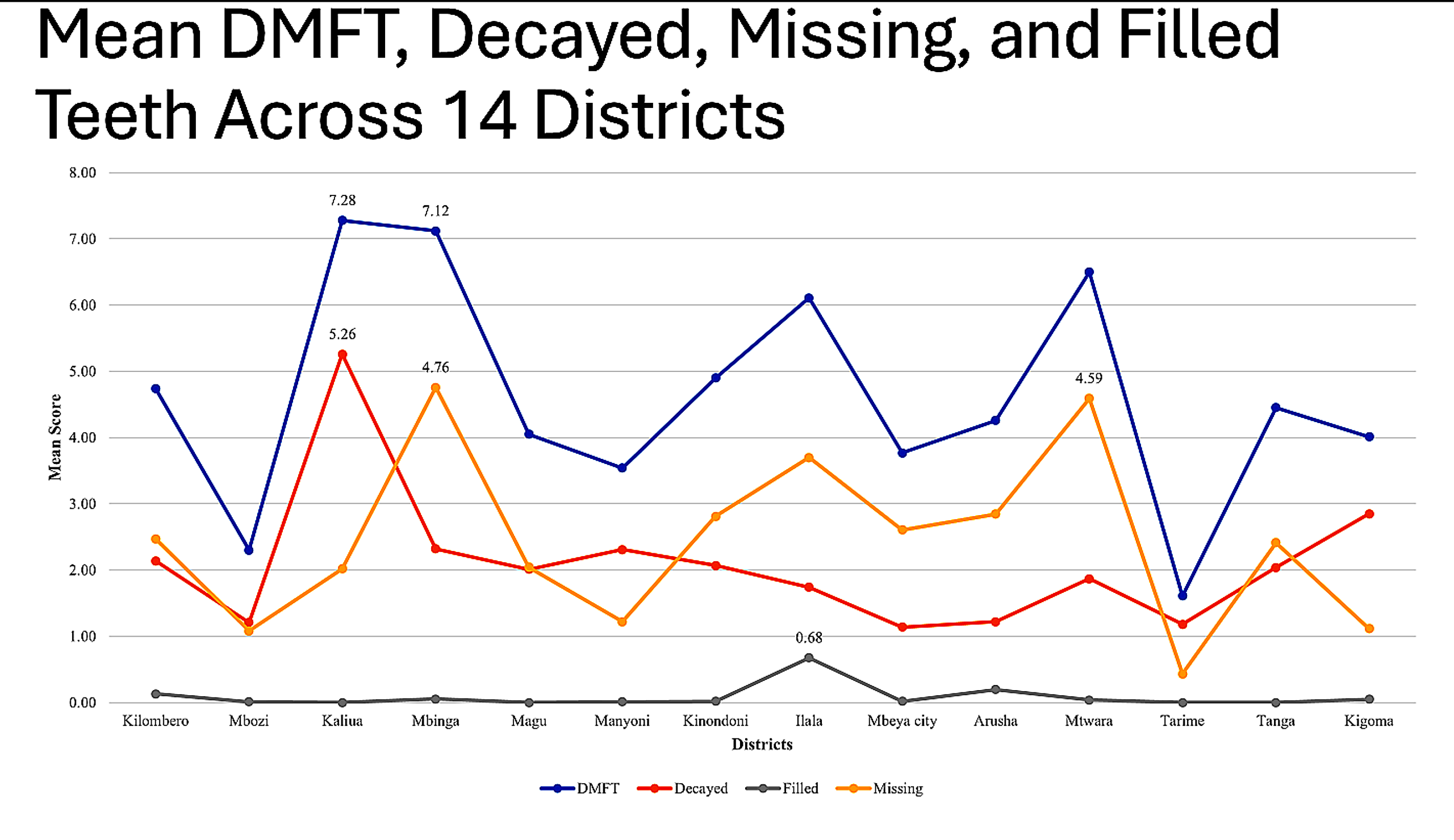
- Based on observations and comparison with the past decade, there appears to be a gradual increase in the utilization of tooth filling services, suggesting a positive shift toward tooth preservation.
- Despite this, missing teeth remain the dominant component of the DMFT index across most districts.
- The distribution indicates significant geographical disparities, with some areas showing high levels of tooth loss and limited uptake of restorative care.
- These findings imply that many patients still present at advanced stages of disease, where extraction often becomes the only viable treatment option.
- The observed improvements in restorative care may be associated with efforts by the Ministry of Health, expanded access through the National Health Insurance Fund (NHIF), and the increasing number of private dental clinics and hospitals providing dental services.
- As these data are from 2020, further progress is expected; future discussions will incorporate more recent evidence on the utilization of tooth filling services.
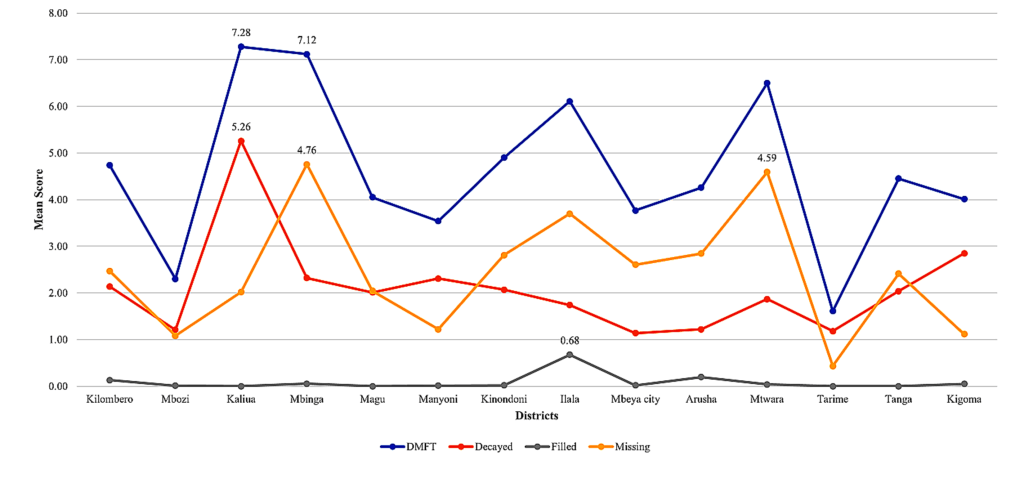
Figure:Distribution of DMFT Components Across Districts in Tanzania (2020)
There are encouraging indications of improved access to dental care in Tanzania, particularly in relation to the availability of services across both public and private sectors. However, a critical examination of the 2020 National Oral Health Survey data reveals that missing teeth (M component) continue to dominate the oral health profile across most districts.
While decayed teeth (D) remain present, the consistently low levels of filled teeth (F) indicate that restorative care is still underutilized. This imbalance suggests a persistent gap between disease occurrence and timely intervention, with many patients seeking care only at advanced stages where extraction becomes inevitable.
The distribution across districts further highlights significant inequities in access to and utilization of restorative services, pointing to the need for more targeted and equitable service delivery strategies.
Notably, improvements in access can be linked to ongoing efforts by the Ministry of Health, increased coverage through the National Health Insurance Fund (NHIF), and the growing number of private dental clinics and hospitals offering dental services. These developments have created a foundation for more preservation-focused care; however, the current data suggest that this potential is not yet fully realized in practice.
Call to Dental Professionals
- Strengthen early diagnosis and timely intervention to reduce progression to tooth loss
- Increase the provision and promotion of restorative treatment options, including dental prostheses to replace missing teeth, in order to improve functional outcomes and overall quality of life for patients.
- Continuously update clinical skills and adopt modern dental technologies
- Align practice with a preservation-focused model of care, rather than extraction-based approaches
While Tanzania has made meaningful progress in expanding access to dental care, the burden of missing teeth remains high and restorative services limited. Bridging this gap will require not only improved access but also enhanced clinical capacity, technological adoption, and a stronger emphasis on early conservative management of dental disease.
For a more detailed understanding, access the full report:
2020 National Oral Health Survey (Full Report)